
Tips & Updates
Wildfire Season & Power Outages: Is a Generator Right for Your Idaho Home?
Idaho's wildfire season brings a real risk of extended power outages. Here's how to know if a backup generator is worth it for your home — and what to look for.
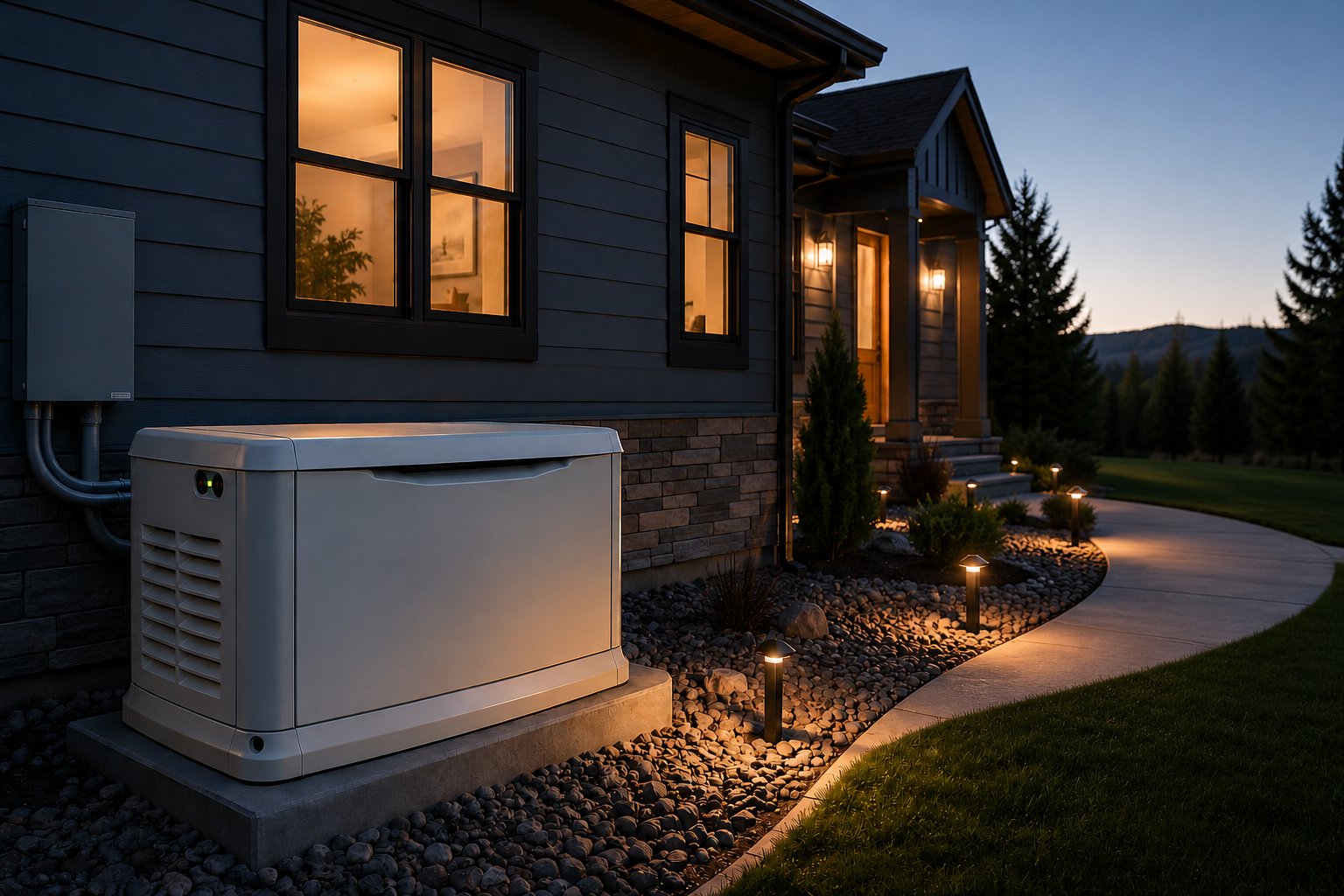
Late summer in Idaho means wildfire season — and with it, the growing risk of extended power outages. Whether it's a utility shutting down lines as a precaution during high fire danger, smoke damage to transmission equipment, or a fire-related grid failure, more Idaho homeowners are losing power for hours or even days at a time. A backup generator used to be a nice-to-have. For a growing number of homes, it's becoming a necessity.
Do You Actually Need One?
You Live in a High Fire-Risk Area
Homes near forested or rural areas of the Treasure Valley face a higher likelihood of preventive power shutoffs during red flag warning days. If your area has seen shutoffs or extended outages in past fire seasons, that risk isn't going away.
You Work From Home or Rely on Medical Equipment
Losing power for a few hours is an inconvenience. Losing it for a day or more when your income or health depends on electricity is a real problem. A generator isn't a luxury in these cases — it's a safeguard.
You Have a Well Pump, Sump Pump, or Freezer Full of Food
No power means no water pressure for well-fed homes, no basement flood protection, and a freezer that starts thawing within hours. These are the situations where a generator pays for itself the first time it's needed.
Past Outages Have Already Cost You Money
If you've dealt with spoiled groceries, a flooded basement, or missed remote work hours during a past outage, that's a direct signal. The next outage is a matter of when, not if.
Portable vs. Standby: Which Makes Sense?
Portable Generator
- — Lower upfront cost
- — Must be manually set up and fueled
- — Powers select circuits or appliances only
- — Requires a transfer switch to safely connect to your panel
Standby Generator
- Turns on automatically within seconds of an outage
- Connects to natural gas or propane — no manual refueling
- Can power the whole home, not just select circuits
- Requires professional electrical installation and permitting
A portable generator is a reasonable stopgap if outages are rare and short. But if your area sees fire-season shutoffs more than once a year, a standby generator removes the guesswork entirely — no fueling at 2 a.m., no extension cords through a window, just power that switches on automatically.
What Installation Involves
A standby generator installation is an electrical project, not a DIY weekend job. It typically includes:
- Sizing the generator correctly for your home's electrical load
- Installing an automatic transfer switch tied into your panel
- Running a dedicated fuel line (gas or propane) to the unit
- Placing and mounting the generator per code — setbacks, clearances, and ventilation all matter
- Permit pull and inspection to confirm everything meets Idaho electrical code
An improperly installed generator isn't just a warranty issue — it can backfeed power into the grid and put utility workers at risk. This is exactly the kind of work that should never be DIY'd.
Be Ready Before the Next Outage
Get a Free Generator Quote
F.U.S.E. installs standby and portable-ready generator systems throughout the Treasure Valley. Licensed, insured, and done right.